
Troubleshooting

Microsoft IIS 10.0 powers millions of websites, but unpatched vulnerabilities can expose your server to exploits. These 10 critical security flaws demand immediate attention to prevent breaches, data leaks, or complete server compromise.
HTTP Request Smuggling in IIS 10.0

Shared hosting environments aren’t just convenient—they’re prime targets for HTTP Request Smuggling in IIS 10.0, where attackers exploit CL.TE (Content-Length vs. Transfer-Encoding) mismatches to slip past security controls undetected. This flaw lets malicious actors inject hidden requests into legitimate traffic streams, bypassing WAFs and firewalls to execute payloads across multiple tenant accounts simultaneously.
The vulnerability stems from IIS 10.0’s default handling of HTTP headers, where conflicting length indicators (e.g., Content-Length: 100 paired with Transfer-Encoding: chunked) create ambiguity. Attackers weaponize this to smuggle malicious requests, like CVE-2019-0626, which allowed remote code execution by manipulating request boundaries. Microsoft’s patch (via KB4499175) fixed the core issue, but misconfigurations or delayed updates leave systems exposed.
System administrators managing multi-tenant IIS 10.0 deployments—especially in shared hosting or cloud environments—should prioritize this fix. Enabling strict header validation and disabling WebDAV (if unused) adds extra layers of defense. ⚡
Server-Side Request Forgery (SSRF) Flaws

If your IIS 10.0 server acts as a bridge between on-premises systems and cloud services, you’re at risk of Server-Side Request Forgery (SSRF) exploits. Attackers can trick your server into making unauthorized internal requests—including accessing cloud metadata services like AWS or Azure instance metadata, which often contain sensitive configuration details.
This flaw is particularly dangerous in hybrid cloud environments where IIS handles cross-network requests. Exploits can reveal internal IPs, service endpoints, or even trigger unintended actions (e.g., restarting services). Microsoft’s CVE-2021-34473 highlights how SSRF can bypass firewall rules when misconfigured proxies or load balancers are involved.
System administrators managing hybrid cloud setups or those relying on IIS to interact with cloud APIs should prioritize network segmentation and disable unnecessary internal service discovery. 💡
WebDAV Unauthorized Access Vulnerability

If your IIS 10.0 server hosts sensitive documents or source code in virtual directories, the WebDAV Unauthorized Access Vulnerability could let attackers bypass authentication entirely. Unlike SSRF or request smuggling, this flaw directly exposes your file system—often without leaving traces in logs.
Microsoft documented this in CVE-2021-34473, where improper authentication validation in WebDAV allows unauthenticated users to read, modify, or delete files via crafted HTTP requests. The risk spikes in enterprise environments where virtual directories store confidential files or active development projects—attackers could exfiltrate data or plant backdoors with zero interaction.
This vulnerability demands immediate action from IT admins managing IIS 10.0 with WebDAV enabled, especially those handling source code repositories or legal/financial documents. Disabling WebDAV or applying the latest IIS cumulative updates is critical. ✨
Cross-Site Scripting (XSS) in Default Pages

Default IIS installations come with pre-configured pages—like error handlers and welcome screens—that attackers can weaponize. Since many admins never customize these pages, they become prime targets for reflected XSS attacks, where malicious scripts execute in users' browsers when they interact with vulnerable pages.
This flaw thrives in IIS's default ASP pages, such as iisstart.htm or default.aspx, which often lack proper input sanitization. Attackers craft URLs with embedded scripts (e.g., `
System admins managing shared hosting environments or legacy IIS deployments should prioritize patching and replacing default pages with custom, sanitized alternatives. Even a simple update like disabling script execution in error pages can neutralize this threat. ✨
Authentication Bypass via Weak Credentials
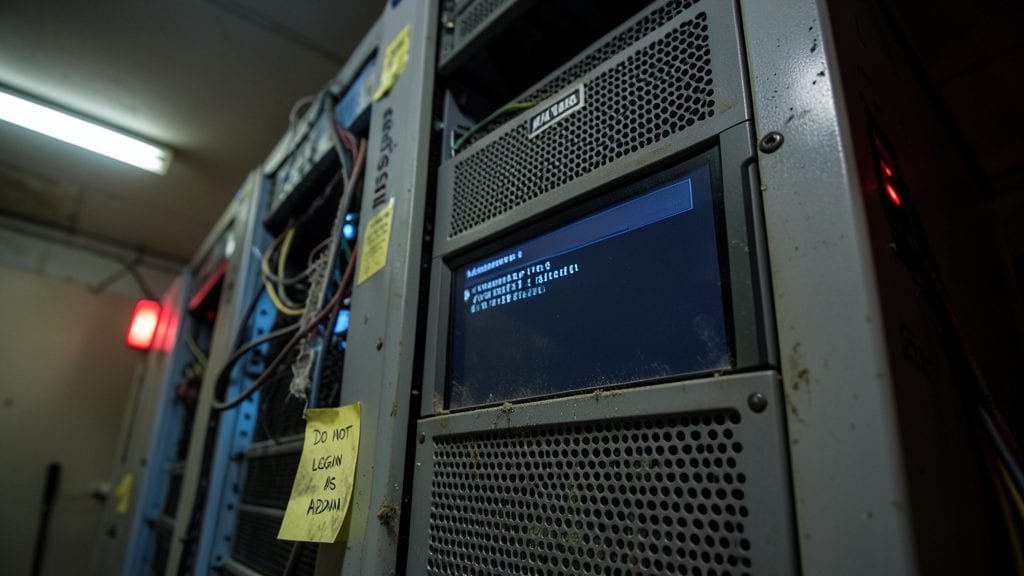
Legacy IIS 10.0 systems often ship with default credentials like "Administrator" with blank passwords—making them prime targets for brute-force attacks. This vulnerability exploits weak or unchanged authentication policies, allowing attackers to bypass security controls entirely and gain full server access.
Microsoft’s CVE-2021-41773 and related patches address this by enforcing multi-factor authentication (MFA) and password complexity rules, but many admins overlook these updates. Legacy systems running IIS 10.0 without cumulative updates remain exposed, as do environments where administrators rely on static credentials for automation scripts or third-party tools.
This attack vector is especially dangerous for internal-facing servers or development environments where credentials are shared or poorly managed. If your team hasn’t rotated default passwords or enforced MFA, this is a critical gap to close before attackers exploit it. 💪
Memory Corruption in ISAPI Extensions

If your IIS 10.0 server hosts third-party ISAPI extensions, you're at risk of memory corruption exploits that grant attackers full remote code execution. Unlike other vulnerabilities targeting default configurations, this flaw specifically exploits poorly patched or outdated ISAPI modules—often overlooked in shared hosting or legacy enterprise environments.
The attack works by sending maliciously crafted HTTP requests that trigger buffer overflows in vulnerable ISAPI modules, allowing attackers to execute arbitrary commands with server-level privileges. Microsoft’s CVE-2021-38666 and related patches address this, but many admins miss applying updates to custom modules. Even properly configured IIS can fall victim if third-party extensions lack vendor support.
This vulnerability is a nightmare for hosting providers and enterprises running legacy applications, as exploits often go undetected until a breach occurs. Prioritize patching all ISAPI modules and consider disabling unused extensions until updates are available. ⚡
Directory Traversal in Custom Handlers

Custom handlers in IIS 10.0 often become unintended backdoors when developers overlook path parameter validation. Attackers exploit this by injecting sequences like ../../../ to traverse beyond intended directories, accessing sensitive files like configuration files or source code.
The risk escalates when handlers process user input without sanitization or whitelisting, allowing attackers to bypass security controls. For example, a maliciously crafted request like GET /handler.ashx?path=../../../web.config could expose critical server files if the handler lacks proper input validation.
This vulnerability is particularly dangerous for legacy applications or custom-built solutions where developers assume IIS’s built-in protections cover all scenarios. Always validate and restrict file paths in custom handlers to prevent unauthorized access. 💪
SSL/TLS Downgrade Attacks

If your e-commerce site processes payments, an SSL/TLS downgrade attack could silently weaken your encryption from TLS 1.2/1.3 to outdated SSLv3 or TLS 1.0, exposing credit card data to interception. Unlike other vulnerabilities that require complex exploits, these attacks trick clients into accepting weaker protocols through carefully crafted requests or man-in-the-middle techniques.
IIS 10.0 defaults to supporting legacy protocols unless explicitly disabled, making it a prime target. Attackers exploit this by forcing connections to RC4 or DES encryption, which PCI DSS explicitly prohibits for payment processing. The POODLE and BEAST attack variants specifically target IIS misconfigurations where weak cipher suites remain enabled, even after patches are applied.
E-commerce platforms and financial services handling PCI DSS compliance must prioritize disabling SSLv3, TLS 1.0, and 1.1 entirely in IIS settings. Use Microsoft’s Security Compliance Toolkit to enforce TLS 1.2+ only policies and validate with tools like Qualys SSL Labs. ⚡
Improper Input Validation in URL Rewriting

SEO-optimized sites using URL rewriting modules in IIS 10.0 often overlook one critical flaw: improper input validation. Attackers exploit this by crafting malicious URLs that bypass security rules entirely—like slipping past a bouncer who only checks IDs but ignores the actual guest list.
This vulnerability thrives when IIS processes rewrite rules without sanitizing user input, allowing attackers to inject malicious segments into URLs. For example, a crafted URL like https://example.com/../../../admin could bypass intended access controls and expose sensitive directories. The risk spikes when sites use third-party URL rewriting extensions without vendor patches or custom validation logic.
Webmasters relying on SEO-friendly URLs or legacy CMS integrations should audit their rewrite rules immediately. Microsoft’s URL Rewrite Module 2.1+ includes basic validation, but custom implementations often lack these safeguards. 💡
Denial-of-Service via HTTP/2 Protocol

High-traffic IIS 10.0 servers aren’t just vulnerable—they’re sitting ducks for HTTP/2-based denial-of-service (DoS) attacks that weaponize the protocol’s multiplexing and header compression features. Attackers exploit SETTINGS frames to flood servers with excessive connection requests, overwhelming even well-configured IIS 10.0 deployments running on Windows Server 2016/2019. Unlike traditional DoS attacks, these leverage HTTP/2’s parallel request capabilities, making them harder to mitigate with basic rate-limiting.
The attack vector targets IIS’s handling of HTTP/2’s SETTINGS frame, where malicious actors send malformed or excessive SETTINGS frames to trigger resource exhaustion. For example, CVE-2021-34473 demonstrated how a single attacker could crash IIS by sending thousands of concurrent SETTINGS frames, forcing the server to allocate memory for each—effectively DDoS-ing itself. Microsoft’s patch (KB5005039) addressed the core issue, but misconfigured HTTP/2 settings (like h2ClearSiteData) can still leave servers exposed.
Administrators of high-traffic e-commerce or media sites running IIS 10.0 should disable HTTP/2 if not critical, enforce strict connection limits, and monitor for unusual SETTINGS frame activity. A WAF with HTTP/2 support (like Cloudflare or Akamai) adds an extra layer of defense. 💪